The Middle Frame · Dubai, UAE
The Story Behind The Middle Frame: A Visual Home for Arab Stories
By Mohammad Alnobani · June 19, 2025 · 9 min read
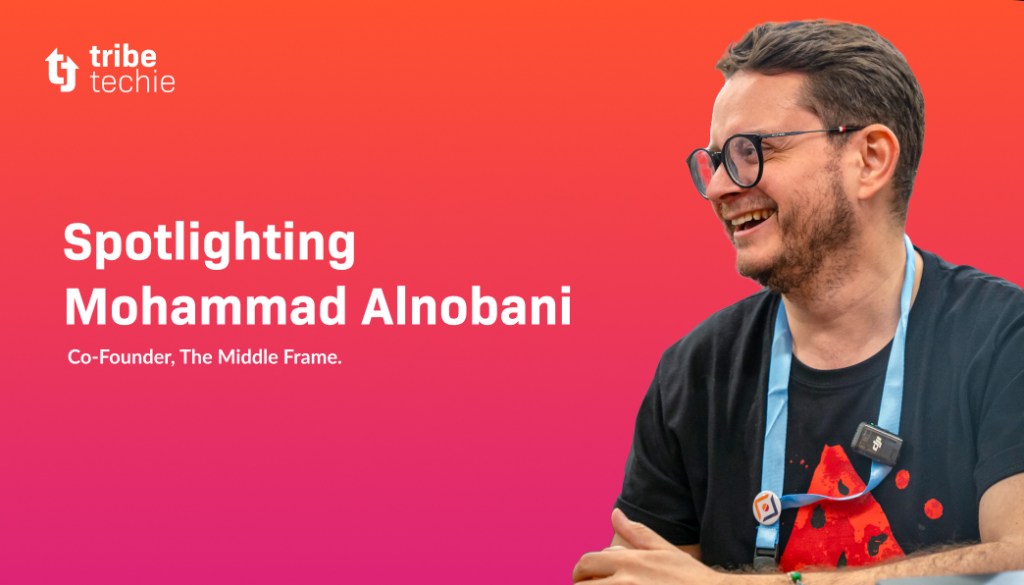
“Media isn’t just about what’s in the photo. It’s about who’s behind the lens, what they know, and what they see.” — Mohammad Alnobani (Co-founder, The Middle Frame)
In today’s content-driven world, it’s easy to assume there’s a photo for everything. Need a shot of a bustling city? A quiet café scene? A professional in a suit? There’s stock for that.
But what happens when the story you’re trying to tell is yours, and the visual language simply doesn’t exist? This Founders Series will tell you.
This was the reality Mohammad Alnobani faced for years. Not once or twice, but every single day.
He wasn’t a photographer. He wasn’t working in some obscure part of the world. He was a creative, an advertiser, a project manager, and eventually, a founder. And throughout his career, he noticed something no one seemed to be fixing: the Arab world was invisible on stock image platforms.
“I worked in advertising in Qatar, and I ran a digital marketing agency in Palestine. Time after time, we needed images that reflected our people, our culture, our clothes, our spaces, and we couldn’t find them. We’d end up pulling something foreign, then try to Photoshop it into something passable.”
This daily workaround wasn’t just inefficient, it was exhausting, and in many ways, insulting. Why did creatives across the Arab world have to rely on images that didn’t reflect them?
“Designers would pull images from international platforms and then spend hours Photoshopping them, just to make the thobe look more Qatari than Emirati. And sometimes, even after all that effort, the client would still reject it.”
The tools weren’t built for them. The visuals weren’t made for them. And Mohammad knew this wasn’t just a creative limitation, it was a cultural omission.
That tension sat with him for years. But the shift didn’t happen until he met someone who saw the same problem from a different lens.
When the right idea meets the right person
In June 2021, during a program, Mohammad met Raya, a photographer. They had just been introduced when she pitched an idea that lit something up in him: a stock image platform that served the Arab world.
“I have to give her credit, it was her idea. But the moment she said it, I just felt it. I told her right away, I understand the problem. I’ve lived it.”
Raya had spent years building connections with photographers and shooting visuals herself. Mohammad had the brand and agency experience, working on the content side of advertising. Together, they had both the problem and the pieces.
“At the time, I was working on another startup. But a few weeks later, I reached out and asked if she’d be open to co-founding. She said, ‘I’ve been waiting for you.’ That’s when we started building.”
They didn’t jump into a product right away. First, they validated the problem. Raya spoke to photographers. Mohammad spoke to designers, agencies, and marketing leads.
“We realized this wasn’t just our issue. Creatives across the region had been struggling with the same thing. They just hadn’t found a solution yet.”
The more they listened, the more it became clear: there was an enormous gap between how the region was being represented and how people saw themselves.
More than stock photos, it’s about being seen
When Mohammad and Raya launched The Middle Frame, it wasn’t to fill a niche; it was to answer a need that had been ignored for far too long.
“We’re representing every culture from the MENA region, not just countries, but cities, towns, and villages. We want people to see themselves in the visuals they use.”
What started as a simple idea quickly became a growing community. Today, The Middle Frame has over 2,200 photographers across 22 countries, a living archive of local realities, captured by local creators.
“We’re not just showing off architecture or food. We’re capturing the human experience, the everyday life, the cultural markers, the things that make us us.”
But it’s not just about availability. It’s also about access. Mohammad knew from experience that even when content existed, it was often impossible to find or use.
“Before, if someone wanted an image of a small town in Sudan or a family scene in Upper Egypt, they had no idea where to look. Now, they can come to The Middle Frame, search, and find content made by someone who lives there.”
That matters. Because representation isn’t just about visibility. It’s about ownership.
Real people. Real places. No guessing.
Not all images make it onto the platform. And that’s by design.
“When someone uploads a photo, it doesn’t go straight to the site. First, it goes through an AI moderation system. It checks the image quality, detects objects, and flags anything sensitive. Then, it goes to a human team.”
That team reverse-searches the image, cross-checks its location, and, if needed, contacts the photographer directly.
“We ask questions. Where was this taken? Who is in it? Is this person local? Is this image authentic to the context?”
This level of review takes time, but it protects the core of the platform: credibility.
“We once got a beautiful photo from South Saudi Arabia. I sent it to our team like, ‘Where is this from?’ I was in disbelief. It felt so real, so unexpected. That’s when you know you’re doing something right.”
The goal is not to flood the internet with more content. It’s to create a space where authentic representation isn’t compromised for speed or scale.
Getting stuck in Jordan wasn’t the plan, but it changed everything
The Middle Frame started with small wins, a grant in Palestine, early support from Gaza Sky Geeks, and personal backing from family and friends. But the real turning point came through unexpected chaos.
“In October 2023, I was coming back from the One Young World Summit in Belfast. I landed and found out the borders to Palestine were closed. I couldn’t get back. I was stuck in Jordan.”
He and his CTO, Moath, were suddenly in limbo. But out of that disruption came momentum.
“A friend of mine, who’s a lawyer, asked for our pitch deck. I asked who we are sending it to, and he said to Flat6labs if I’m interested, and I said Definitely yes!
Two days later, Flat6 Labs called. Since Mohammad was in Jordan, they asked to meet. A few meetings later, they had their first major investment: $115,000.
“They asked if I was in Jordan, I could pass by their office, or we could have a call if I was traveling, little did they know that I was stuck in Jordan.”
“That helped us develop the product, expand our services, and test new ways of working with brands and photographers. It changed everything.”
They went on to secure a $70,000 grant from Shoman Foundation and a $100,000 follow-up investment from Flat6 Labs. All from a moment that initially felt like a setback.
“We got stuck in Jordan — and ended up getting our biggest break. Timing really is everything sometimes.”
If AI’s going to tell our stories, it better learn the culture
As AI tools became more popular, The Middle Frame team tested them out. What they saw was deeply familiar and disappointing.
“We tried all the major generative AI tools. Not one of them could generate accurate Arab visuals. The clothes were wrong. The faces were distorted. It was clear we weren’t part of the training data.”
So they decided to build their own.
“We partnered with photographers who had huge archives. We got exclusive rights to their data, and now we’re training a generative AI model that’s culturally accurate — built from our region, for our region.”
It wasn’t a simple pivot. The team had to teach themselves the basics, find the right talent, and bring on a new co-founder, Christophe Zoghbi, founder of Zaka AI, of Lebanese origin, currently based in Canada, to lead the technical side.
“We didn’t come from AI. But we learned. We researched. We asked questions. Now, we’re getting ready to launch our model in July.”
This model will allow users to generate images that reflect the Arab world accurately, respectfully, and beautifully, something no other tool is doing.
Photographers aren’t contributors, they’re co-builders
At the core of The Middle Frame is a community. Not just customers or contributors, but people who shape the platform itself.
“We wouldn’t be here without the photographers. Some of them aren’t in it for the money. They want their names on their work. They want to see their stories respected.”
That’s why the platform doesn’t just collect content. It protects it. Photographers are involved in every major decision, including AI training permissions.
“We always ask. We don’t assume. We’ve built a community management team that stays in touch with them, supports them, and listens. That’s non-negotiable.”
For Mohammad, this isn’t about token representation. It’s about genuine collaboration.
Built on culture, grounded in values
When asked how his culture and religion shape his work, Mohammad doesn’t give a polished answer. He gives a personal one.
“Definitely. Our backgrounds shape everything. Even when we label images, we think about ethnicity, origin, religion, and cultural context. It all matters.”
He makes it a point to immerse himself in the communities the platform serves. That’s why he regularly lives and works in cities like Cairo for months at a time.
“You can’t build for a place you don’t understand. You have to live it, walk the streets, eat the food, feel the rhythm. That’s how you build with respect.”
Waiting for validation? Don’t. Just build.
If there’s one thing Mohammad wants founders across the region to remember, it’s this:
“Tell your story. Don’t wait for investors to validate it. Build, test, listen. A no is still progress.”
He believes that passion isn’t optional; it’s the only thing that sustains you.
“When we hire, we ask: Why The Middle Frame? If you’re not passionate about culture and representation, it shows.”
Oh — and one fun fact
“I’ve lived in six places and traveled to more than 25. And I can sing along to any song, even if I don’t know the lyrics. Just give me 15 seconds.”
A global mind with a local mission, and a playlist full of songs he doesn’t actually know.
The Middle Frame is more than a platform. It’s a space for storytellers, a stage for culture, and a reminder that visibility should never be a privilege. And thanks to Mohammad and his team, the Arab world isn’t just being seen; it’s being seen by its own people and through its own eyes.